
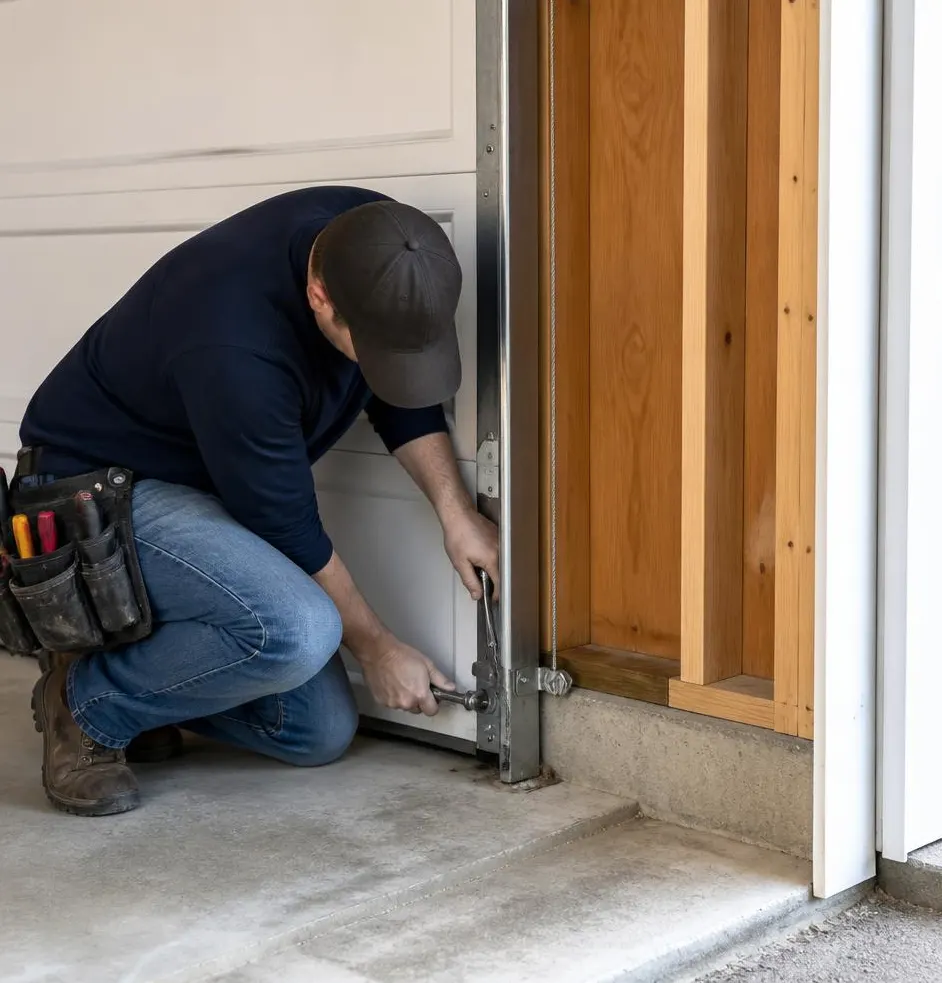
What Waiting One More Season Actually Costs You
Here's the argument in a nutshell: one of you wants to call someone about the garage door now, and the other thinks it can wait until spring. The honest answer is that waiting usually turns a $150-250 roller or cable repair into a $400-700 spring-and-cable replacement, or worse, a dented door panel and a trip to urgent care if someone's hand or foot is nearby when a cable finally lets go. Cedar Grove winters are hard on garage doors — salt, slush, and repeated freeze-thaw cycles work on metal parts all season long. A door that's "a little noisy" in October is often a door that's one cold snap away from a real problem.
What Cables Actually Do (And Why Fraying Matters)
Your garage door doesn't lift itself. Springs do the heavy lifting, but cables are what connect that spring tension to the bottom corners of the door and keep everything moving evenly. When a cable frays, it's losing individual strands of wire one at a time — you might not notice anything different about how the door operates until the moment it can't take any more load.
Signs a cable is on its way out:
- Visible kinks, rust spots, or small broken wire strands near the bottom bracket or around the drum at the top
- The door looks slightly crooked when it's open, like one side is sitting lower than the other
- A popping or snapping sound during operation that wasn't there before
- Loose cable with visible slack instead of being taut against the drum
When a cable snaps under tension, it doesn't just stop working — it can whip, and the door can drop unevenly or come off track entirely. This is exactly the kind of "loud failure" that starts as a quiet, ignorable fray.
What Rollers Actually Do (And Why Wear Matters)
Rollers are the small wheels that ride inside the metal tracks on either side of the door, guiding it up and down. Most original builders used steel or basic nylon rollers, and on older housing stock around Essex County, it's common to find the same rollers that came with the house decades ago — never replaced, just getting noisier every winter.
Signs rollers are wearing out:
- Grinding, squealing, or rattling as the door moves, especially noticeable in the garage's echo
- Visible flat spots, cracks, or chunks missing from the roller wheel itself
- The door shudders or jerks instead of moving smoothly
- Debris or rust flakes collecting at the bottom of the track
Worn rollers put extra strain on everything downstream — the opener, the cables, the track itself. A roller that's dragging instead of rolling forces the opener motor to work harder and puts uneven stress on the cables that are already carrying the door's full weight. It's rarely just one part failing in isolation; it's a chain reaction.
Why This Is Worse Right Now Than It Looks
Cold metal contracts, and road salt tracked in on tires or boots accelerates rust on cables, tracks, and roller axles. Add a nor'easter or two and the freeze-thaw cycle that's normal for this part of New Jersey, and small amounts of surface rust become pitting, which weakens cable strands and roughens roller surfaces faster than in milder months. A door that seemed fine in September can develop real problems by January simply because it sat through a few temperature swings without anyone checking the hardware.
Settling the Argument
So who's right? If the door is making any of the sounds above, or if you can see fraying or flat-spotted rollers, the spouse pushing for a fall or early-winter check-up wins. This isn't a "let's wait and see" category of problem — cables under tension don't give much warning before they fail completely, and a failed cable with the door partway open is a safety hazard, not just an inconvenience. The spouse arguing it can wait is usually working off the fact that the door still opens and closes. That's true right up until it doesn't.
When to Call Cedar Grove Garage Door
If you're hearing grinding or squealing, seeing visible wear on cables or rollers, or the door just feels "off" compared to how it used to move, that's the time to call rather than wait for a full failure. Our Garage Door Maintenance visits cover exactly this — inspecting cables, rollers, tracks, and hardware for wear before winter weather makes things worse, lubricating moving parts, and catching small issues while they're still small and inexpensive to fix. If a cable has already frayed past the point of safe use or a spring is showing signs of fatigue alongside the cable wear, our Spring Replacement service handles both together, since they're almost always connected on an older door.
We serve homeowners throughout Cedar Grove, Verona, Montclair, Caldwell, West Caldwell, North Caldwell, Little Falls, and Bloomfield, and we show up when we say we will. If your garage door has been making noise you've been meaning to ask someone about, settle it before the next cold snap — call Cedar Grove Garage Door today and get it checked out properly.