
The Short Answer
Burglars rarely pry a garage door open. Instead, they exploit the emergency release cord, a flimsy side door, a stolen or guessed keypad code, or an unlocked connecting door into the house. Every one of these has a simple, permanent fix. A single afternoon of work closes most of the gaps that matter.
Fishing the Emergency Release
Nearly every garage door has a red release cord that disconnects it from the opener trolley, meant for power outages. It's also the single most common break-in method. Someone slips a coat hanger or a thin wire through the gap at the top of the door, hooks the release handle, and pulls it. The door disengages and lifts by hand in seconds — no alarm, no broken glass, nothing to explain to a neighbor who glances over.
This works especially well on older doors with wider panel gaps or warped weatherstripping, which describes a lot of the original doors still in service on houses built decades ago. The fix costs almost nothing: thread a zip tie through the release mechanism so the cord can still be pulled by hand from inside, but a hook from outside can't engage the lever. Some installers use a shield or a small padlock accessory instead. Either way, test it afterward by trying the manual release yourself so you know it still works in a power outage.
The Side Door Nobody Thinks About
Garages with a walk-in side door are frequently the actual weak point, not the big overhead door at all. These doors often have a cheap spring latch instead of a deadbolt, and because they're tucked along the side of the house, nobody sees someone kick it in. Once inside the garage, a burglar has privacy, tools, and often a direct door into the house itself. Upgrade that side door to a deadbolt, and if it leads into the living space, treat the connecting door exactly like an exterior door — solid core, deadbolt, and locked, not just latched.
Weak or Stolen Keypad Codes
Exterior keypads are convenient until the code is something obvious like 1-2-3-4 or a birth year, or until it hasn't been changed since installation. Codes also get shared and forgotten — a dog walker, a contractor, a kid's friend — and nobody resets it afterward. Change the code a couple of times a year and immediately after any service visit or houseguest. If your opener is old enough that it uses a fixed code rather than a rolling code that changes with every use, that's worth upgrading; fixed-code remotes can be captured and replayed with cheap, widely available tools.
Forced Entry and Older Hardware
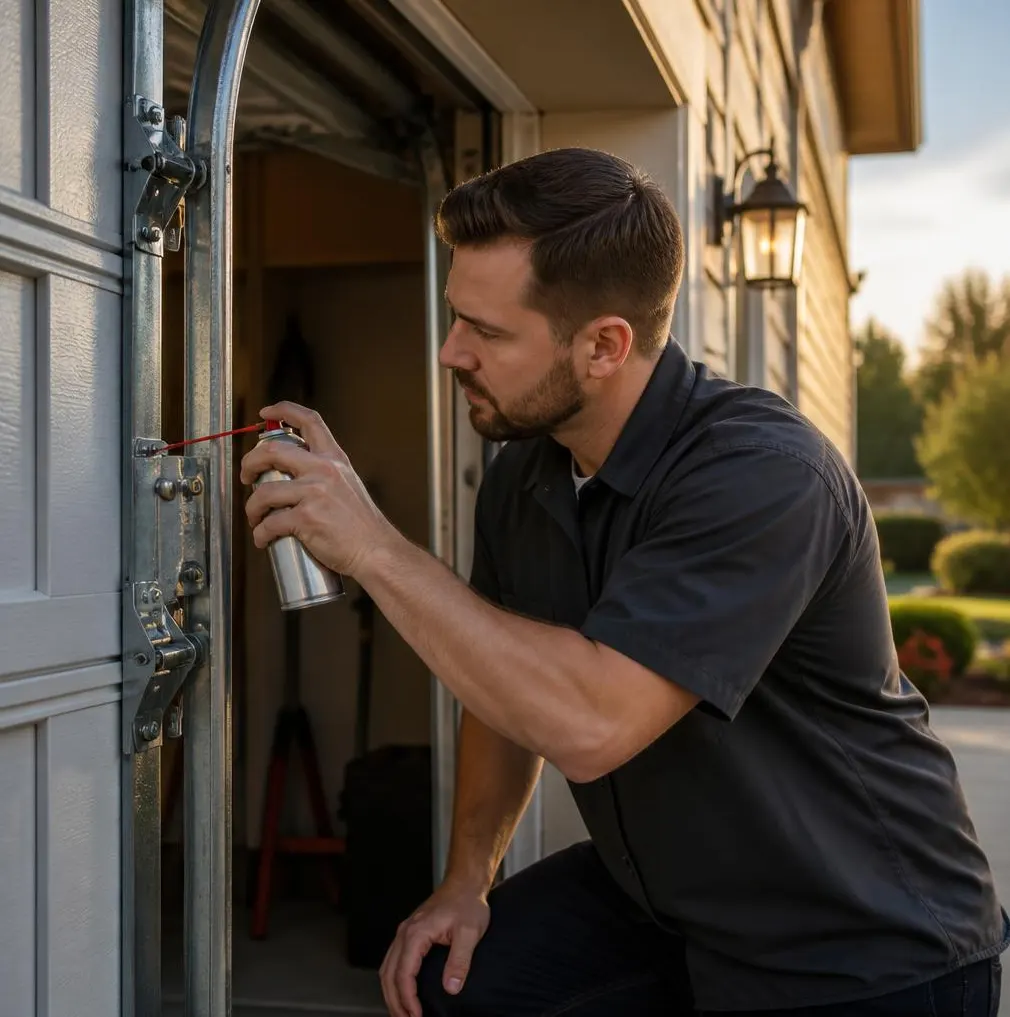
Straight brute force does happen, particularly on older torsion systems where the lock bar or deadbolt into the track has weakened over the years of freeze-thaw cycles. Salt air and moisture from winter plowing and de-icing work into hinges, track bolts, and lock mechanisms, and a door that locks on paper but doesn't engage solidly offers little real resistance. If your lock bar doesn't slide smoothly and seat fully, it's cosmetic, not functional.
Windows That Advertise What's Inside
Decorative windows in the top panel look nice, but they also let someone see whether your car is gone, whether tools or bikes are visible, and whether the door is manually unlocked. Frosted film or interior curtains on garage windows remove that reconnaissance option without changing the look of the door from the street.
A Pre-Winter Walk-Through
Early fall, before ice and road salt settle in for the season, is a good time to check all of this at once: test the emergency release and zip-tie it, reset the keypad code, check the side door lock, and confirm the lock bar seats fully. It's the same visit where you'd normally check weatherstripping and hardware ahead of nor'easters anyway, so folding in a security check costs no extra time.
When to Call Cedar Grove Garage Door
If your opener still uses an old fixed-code remote, your lock bar doesn't seat properly, or a winter freeze-thaw cycle has left hinges and track hardware loose, that's worth a professional look. Cedar Grove Garage Door handles opener upgrades and full garage door maintenance visits that check locks, hinges, and the release mechanism together, so nothing gets missed. We serve Cedar Grove, Verona, Montclair, Bloomfield, and the surrounding Essex County area.
If you're not sure how secure your current setup actually is, call Cedar Grove Garage Door for a maintenance check before winter sets in.