
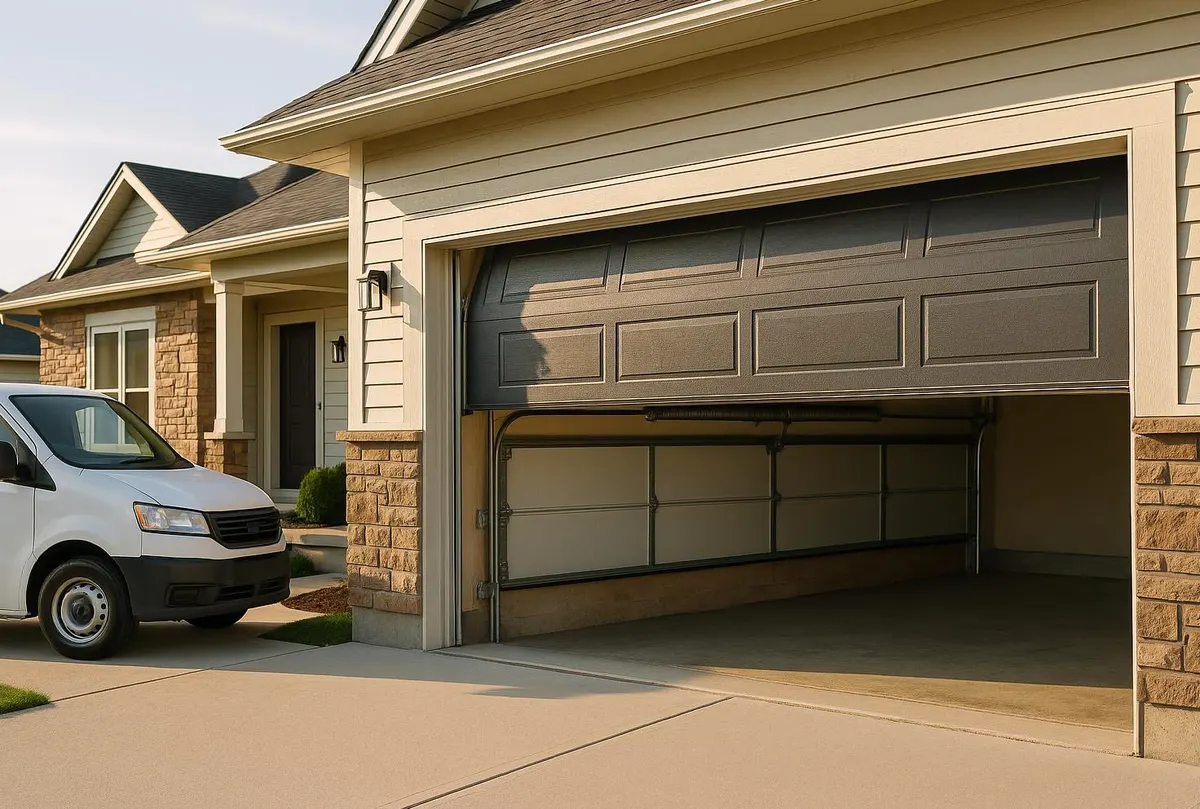
If the power goes out, your garage door isn't stuck — it's just disconnected from its motor, and every opener has a manual release built in for exactly this situation. The exceptions: if a spring is broken, the door feels unusually heavy, it's already off its tracks, or it won't budge at all, stop and call a technician instead of forcing it. Those symptoms mean something mechanical has failed, and pulling harder can make it worse or cause an injury.
Nor'easters and ice storms are a regular part of fall and winter here, and a dead garage door opener during a storm often means you're trying to get a car out — or in — in the dark, on a cold driveway. Knowing the manual steps ahead of time saves you from fumbling with a flashlight in freezing weather.
Tools You'll Need
- A flashlight or headlamp (hands-free is best)
- A step stool if your release cord is mounted high
- A second person, if your door is a heavier original wood or insulated steel model common in older homes in this area
- Work gloves, especially in winter when metal tracks and handles are cold
How to Open the Door Manually
- Find the emergency release cord — usually a red handle hanging from a trolley that rides along the track near the opener.
- If the door is already down, pull the cord down and toward the back of the garage. You'll feel or hear the trolley disengage from the carriage.
- Lift the door slowly using both hands, bending your knees rather than your back. A properly balanced door should feel light and stay open on its own once raised about waist height.
- If the door won't stay open or feels heavy partway up, stop. That usually points to a weakened or broken spring, not something to push through.
How to Close the Door Manually
- Pull the door down firmly and evenly, keeping hands clear of the bottom edge and any pinch points along the sides.
- Lower it all the way until it sits flat on the floor or threshold.
- If your door has a manual lock bar (common on older installations), engage it from inside for security while the opener is offline.
Re-Engaging the Opener After Power Returns
- Make sure the door is fully closed before reconnecting — this prevents the trolley from slamming into the opener's stop point.
- Pull the release cord toward the motor unit (the opposite direction from disengaging) until you hear the trolley click back into the carriage.
- Test the door with your remote or wall button. It should move smoothly through a full open-close cycle.
- Stand nearby and watch the safety sensors near the floor — if the door reverses unexpectedly or won't close all the way, the sensors may be misaligned or icy, which is common after a storm.
What a Homeowner Can Safely Handle
- Disengaging and reconnecting the manual release
- Manually opening and closing the door for short-term use
- Wiping snow or ice off photo-eye sensors
- Checking that the door is balanced (it shouldn't feel heavy or uneven when lifted by hand)
What Needs a Technician
- A door that won't stay open or slams down on its own — likely a spring issue
- Grinding, popping, or scraping sounds during manual operation
- A door that's visibly crooked or off its tracks
- The opener not reconnecting properly, or the door reversing for no clear reason after power is restored
- Any door showing wear typical of original hardware in older area homes — frayed cables, rusted rollers, or worn weatherstripping after years of freeze-thaw cycles
When to Call Cedar Grove Garage Door
If you've gone through these steps and the door still won't operate safely — or the opener won't reconnect after a storm knocked out power — it's time to call. Our Emergency Garage Door Service handles exactly this kind of situation: a door stuck open or closed after a nor'easter, a storm-damaged opener, or hardware that's finally given out after one too many freeze-thaw cycles. If the issue turns out to be a worn or broken spring, our Spring Replacement service gets you back to normal safely, without the DIY risk that comes with handling a door under full tension.
If winter storms are a recurring headache for your garage door, give Cedar Grove Garage Door a call before the next one hits — we serve Cedar Grove, Verona, Little Falls, Montclair, Caldwell, West Caldwell, North Caldwell, and Bloomfield, and we're ready when you need us.